Little Mister Romeo SVG 14 February
A Designer’s First Glance: Charm with Quiet Confidence
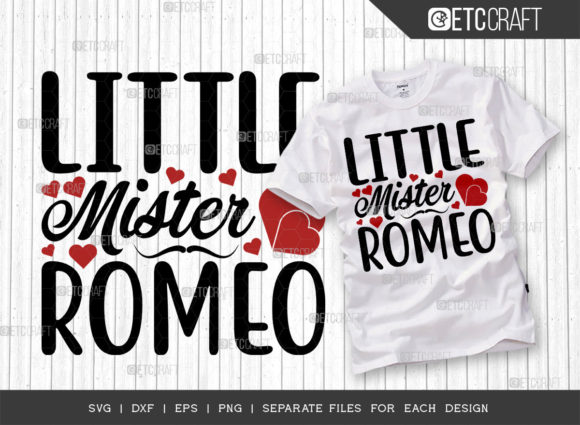
When Little Mister Romeo SVG 14 February opened in my design software, it landed softly—not flashy, not fussy, but unmistakably warm. It’s a compact, centered composition: a tenderly stylized boy figure (think soft curves, gentle posture) paired with “Romeo” in a friendly script and “14 February” in clean, modest sans-serif. No hearts crowding the frame, no overwrought flourishes—just sincerity with a whisper of vintage storybook charm. This isn’t a loud Valentine’s statement; it’s the kind of design that fits naturally on a baby onesie, a linen tea towel for a boutique kitchen line, or the chest pocket of a hand-embroidered apron. Its visual personality leans into quiet affection—not romance as spectacle, but love as daily presence.
Real Project Test: A Personalized Tote for a Local Bookstore Pop-Up
Last week, I used Little Mister Romeo SVG 14 February to embroider a limited-run tote bag for a neighborhood indie bookstore’s Valentine’s Day event. The fabric was medium-weight natural canvas—textured enough to add character, stable enough to hold detail without puckering. I hooped it with medium-cutaway stabilizer, chose muted burgundy and oat thread colors, and stitched at 75% density to preserve the design’s lightness. The result? A finished product that felt handmade *and* intentional—no pixelated edges, no thread nesting, no lost letterforms. Customers paused, smiled, and asked, “Is that for kids? For dads? For someone named Romeo?” That ambiguity is its strength: it invites connection without demanding a single narrative.
Where It Shines—and Where to Pause
Little Mister Romeo SVG 14 February performs especially well across small-to-mid scale embroidery projects:
- Tote bag design and sweatshirt embroidery: Its balanced proportions fill a 4"x4" hoop cleanly and read clearly from arm’s length.
- Baby embroidery and nursery decor: The soft silhouette and gentle scale suit onesies, burp cloths, and pillow covers without overwhelming delicate fabrics.
- Embroidered patch and apron front: Clean outlines and open negative space make it ideal for iron-on or sew-on patches—no dense fill stitch traps lint or distorts shape.
- Holiday embroidery and personalized gift: It avoids cliché while still signaling Valentine’s Day through context (the date, the name), making it feel thoughtful rather than seasonal-decor-by-default.
That said—proceed with care on:
- Stretchy fabric: The curved lines and subtle joins in the figure’s outline need stable tension. Pre-stabilize generously, and avoid high-speed stitching.
- Dark fabric without contrast testing: The script “Romeo” uses fine strokes—test thread color readability before committing to black-on-navy or charcoal-on-graphite.
- Curved surfaces like caps: The design wasn’t built for complex curvature. If using on a cap front, simplify by omitting the “14 February” line or repositioning the figure higher to avoid distortion near the bill seam.
- Frequent-wash items (like kitchen towels or baby clothes): Confirm stitch density supports durability—tight fills may crack over time; consider reinforcing key anchor points with a running stitch outline.
What It Adds to Your Craft Business—Beyond the Stitch
For an Etsy seller or small shop product, Little Mister Romeo SVG 14 February quietly elevates perceived value. It doesn’t scream “sale”—it whispers “I made this *for you*.” That nuance builds customer trust, especially among buyers seeking meaningful handmade product over mass-produced sentiment. Used consistently across a collection—say, matching totes, tea towels, and baby blankets—it reinforces brand consistency without rigid repetition. And because it avoids gendered tropes or overly cutesy motifs, it broadens appeal: grandfathers, uncles, teachers, mentors, and even bridesmaids have all responded warmly to its inclusive warmth.
Practical Embroidery Designer Notes You’ll Actually Use
Before stitching your first finished product:
- Test on scrap fabric—especially if using textured weaves or blends. Watch how the script letters behave at corners and terminals.
- Review stitch density: If your machine defaults to heavy fill, reduce it. This design thrives with air, not weight.
- Check hoop size compatibility: While it fits comfortably in a 4"x4", verify the full bounding box in your software—some versions include subtle spacing that nudges toward 4.2".
- Inspect small details in both zoomed-in and thumbnail views—does “14 February” stay legible when scaled down for a cap or patch?
- Test black-and-white mockups: This design relies on tone and proportion more than color, so grayscale previews reveal clarity issues faster than RGB.
- Confirm licensing before listing as a digital embroidery file or selling embroidered goods commercially. The product description lists SVG, DXF, EPS, PNG—verify usage rights for resale of physical items.
- Use proper stabilizer: Medium cutaway for wovens, tear-away for stable knits. Skip lightweight fusibles—they won’t support the figure’s subtle curves.
Final Thought: A Design That Lets the Maker Shine
Little Mister Romeo SVG 14 February doesn’t dominate the garment or object—it partners with it. As a machine embroidery design, it respects fabric, thread, and time. As a design asset, it gives crafters room to interpret, adapt, and infuse their own voice. Whether you’re building a craft business, prepping for a holiday market, or creating a one-of-a-kind personalized gift, this isn’t just another T-Shirt Designs graphic—it’s a quiet, confident collaborator. And in the world of handmade, that kind of partnership is rare, and worth holding onto.